Green App Machine
Posts mit dem Label want werden angezeigt. Alle Posts anzeigen

Viralnomics: How to Get People to Want to Talk About You

“A must-read for anyone who wants to win at social.” – Jonah Berger (NYT Bestselling author of Contagious: Why Things Catch On)


***Discover how to get the right type of people to want talk about you.***


ARE YOU SHARING GREAT WORK, but it seems nobody is listening? Does it seem like you’re at the mercy of social networks’ mysterious algorithms? Do you feel like it is an insurmountable task to understand and leverage social media?


In Viralnomics: How to Get People to Want to Talk About You, Jonathan Goodman shows you how to appeal to people’s desires and get them to share your message as an extension of themselves.


In this engaging, entertaining, and educational quick read you will discover:


  • Methods to ethically persuade on social media so that you can market all of the time. (pg 105)

  • How to identify and befriend the real influencers (they aren’t who you think they are) because once you know who they are, it’s easier to gain access to customers. (pg 23)

  • A concept buried deep in psychological research that holds the secret to purposeful social sharing. (pg 53)

  • The two keys to creating true power with Internet marketing for more sales. (pg 65)

  • How to craft your messages and build your networks so that you have a clear plan for all of your social media marketing efforts. (pg 115)

If you desire to use social media marketing to get your product, service, or small business out to the right audience you don’t need to understand what buttons to push, you need to understand and appeal to the people pushing them. This book will help.


Don’t delay, scroll up and get the best book on social media today!


Click Here For More Information


Viralnomics: How to Get People to Want to Talk About You

Top Facebook marketing strategies you don't want to miss in 2016


“Move fast, with stable infrastructure.” – Facebook


As of September 2015, Facebook boasted a monthly user base of 1.55 billion, a 14% increase from its numbers in 2014. The social network’s largest age demographic of users is 25 to 34 year olds, which comprises 29.7% of its total user base. Another interesting statistic is that 50% of 18 to 24 year olds check their Facebook when they wake up.


It is no wonder that the social media platform is now many a marketer’s darling.


Latest Trends


1. Instant articles


Instant articles provide publishers with a fast loading page for viewers to access their content. It loads up to 10 times faster than traditional web articles, according to Facebook. Some features include the ability for viewers to zoom into high-res images instantly, play audio commentary or video while looking through an article.


The speed is achieved by Facebook hosting these articles on dedicated servers.


2. More paid advertising and in-depth targeting


While organic reach is down due to changes in Facebook, smart marketers will be able to spot the silver lining in the form of advanced targeting tools Facebook has created. With more options than ever before, experienced marketers now have the potential to reach exactly the kind of viewers they’re going for.


Here’s a guide on exactly how to do it.


Facebook marketing strategies in 2016


1. Move toward video content


Current trends indicate that videos receive 360-degree video also provides a brand new way to tell stories and adds an element of interactivity, wonder and excitement for viewers.


2. Betting on carousel ads


The latest advertising tool in Facebook’s repertoire is also one of its strongest.Brands selling consumer products should take this seriously, the cyclical nature of this format allows you to turn the ad space into a storefront to display your range of products.


Carousel ads have also proved to be effective at engaging viewers with increase their click through rates by 180% and reduce their cost per install by 39% using carousel ads.


3. Pay for ads


While some novice users of social media may frown at the thought of paying for advertising that was free at one point, the more experienced can take advantage of the meticulous targeting tools that Facebook has developed. Everything from age group to where your target audience went to high school can be used to fit your marketing needs.


Delivering relevant, targeted messages never got this easy.


4. Instant articles are worth exploring


While the numbers aren’t solid yet, instant articles may soon earn the preference for readers looking for quick information. Instant articles are set to overtake the viewership of traditional articles once more publishers adopt it and once readers are more familiar with it.


Advertisers will be happy to know that publications do allow ad placements in these articles, but it might not be long before Facebook releases this tool to a wider audience so content creators can also take advantage of it.


Facebook holds its position as a marketer’s dream with these tools that enable the delivery of fast, relevant messages right where their end consumer sits.


Top Facebook marketing strategies you don"t want to miss in 2016

Familiar With Affiliate marketing=-. we want you!

We are launching a new affiliate marketing program and seeking a few visionary people to work with

please e mail me for more details.

We are a new app launching in the USA offering customers discounts on global brands.

And are seeking to connect with experienced marketers

the compensation is great and so are the people !


Familiar With Affiliate marketing=-. we want you!

Publishers want Facebook to make ad changes with Instant Articles

Dive Brief:


  • Facebook is still working out the ad revenue kinks with its Instant Articles publisher partners.

  • The app, which went live for Apple devices last month, hosts publishers’ content rather than sending traffic back to their websites and comes with restrictive advertising policies set by Facebook.

  • According to the Wall Street Journal, insiders say publishers aren’t generating as much revenue from Instant Article ads as they do on their own websites.

Dive Insight:


Facebook is likely going to have to reconsider some its restrictive advertising guidelines on its Instant Articles app after its publisher partners are already pushing back. The guidelines include no “rich media” ads, and one banner ad of 320 x 250 pixels for every 500 words of content. Most publishers would run three or four of that sized ad for every 500 words.


The Washington Post was one publisher that went all in with Instant Articles, running its entire 1,200 daily articles and wire reports on the app. Jed Hartman, chief revenue officer at the Washington Post told the Wall Street Journal, “You have to analyze many factors to determine the monetization potential. You have fewer impressions per page view than we presently do, so you have to balance that, and you don’t have all the animation we can sell on our own site.”


In the same article WSJ Michael Reckhow, Facebook’s Instant Articles product manager, said, “It’s early days with Instant Articles, but one of our principles from the beginning has been to work collaboratively with our publishing partners to understand their needs and shape the product. We’re currently working closely with publishers to understand how their advertising in Instant Articles compares to the mobile web so we can deliver results, while maintaining a great reading experience for people. We’ve made numerous improvements to the advertising capabilities over the past few months and will continue to iterate based on publisher feedback to improve the product.”


Meanwhile, the NewsWhip shared early data on The New York Times’ performance on Instant Articles, revealing that stories on Instant Articles are three times more likely to be shared.


Recommended Reading


Wall Street Journal: Facebook Mulls Ad Changes for Instant Articles After Publisher Pushback
Marketing Dive: Facebook referral traffic to top 30 publishers plunges 32% since January
NewsWhip: Instant Articles Are Shared Three Times More Than Regular Links


Publishers want Facebook to make ad changes with Instant Articles

Want to Engage With Millennials? Don't Forget to Email Them

Want to Engage With Millennials? Don’t Forget to Email ThemThere are many myths and misconceptions floating around these days about Millennials, and many of them are downright negative. They’re entitled. They have been coddled by their helicopter parents. And they are tech-obsessed to the detriment of all else in their lives…okay, maybe that one’s true!


Millennials are definitely tech-natives. Having grown up with gadgets, they are savvy about what advances in technology can bring to the table, and, some would say, are social media obsessed. But are they so engrossed with their social and mobile tools that you need to throw your marketing budget in that direction to reach them? Apparently not. According to the latest research, when it comes to brands that are targeting the younger generation, it’s good old-fashioned email that often wins the day.


Millennial Communication Preferences


Although principally aimed at unearthing financial trends amongst Millennials, the Millennial Research Study from The Principal Financial Group revealed some fascinating nuggets about their communication preferences.


Email wins out for one-to-one contact. More than four in ten respondents said that their preferred method of one-to-one contact with companies is email. This rose to almost half (47 percent) for contact with retail stores.


Recommended for YouWebcast: Using Targeted Account Selling to Crush Your Outbound Sales Quota


Email tops social media and texting. This compared to just six percent that listed social media as their favored method from retail companies, two percent text message and five percent for both phone call and online chat.


Email is relied upon when doing product research. Email also scored strongly for research on products and services at around double the rating for social media. Unsurprisingly web search rated most highly for research but was the only method to beat email.


Is it Possible Social Channels are for Socializing?


So why should this be so for the supposedly socially media savvy, connected Millennial generation who, we are told, live out their lives on social networks? Over at Marketing Land, Steve Dille contends that the clue is in the title—with “social” being the key word. He suggests (and I agree) that the social networks dominate the social interactions of the generation who emerged after the digital revolution started. Since they were old enough to create their first Facebook, Twitter, or SnapChat accounts (or perhaps even before), social media has been the go-to way to communicate with friends and family. But social isn’t the only channel this group uses.


Let’s not forget, though, that email has also been a constant in their lives. After all, however, many bells and whistles a new social platform might have, you still need an active email address in order to set-up and maintain your social accounts. Millennials are also no different than the rest of us in that they have to use their email accounts for practical purposes such as notifications, account administration, product updates, and in some cases, even for work. Most will check their emails every day, and many, it seems, prefer email over social when it comes to direct contact with the brands, businesses, and other organizations they deal with.


The Impact of Mobile on Email


One big factor in the enduring appeal and use of email among Millennials is mobile. The latest figures from Pew Research show that by the end of 2014, 85 percent of the 18—29-year-old age group owned a smartphone; this compares to just 27 percent of over 65s. Mobile friendly apps and email provider upgrades are making it easier than ever to access email messages on mobile and tablets.


This is reflected in the rapidly increasing proportion of email opens on mobile devices, compared to desktops. The latest U.S. Consumer Device Report from Movable Ink suggests that more than half of all emails opened in the first quarter of 2015 were viewed via smartphones.


Email Opens by Device


With nearly another 17 percent being accessed on tablets, desktop opens fell to less than a third of the total. The rate of increase is illustrated by the comparative figures for Q3 2014, which show smartphones at 48.51 percent, tablets at 17.47 percent, and desktop at just over 34 percent. As with everything else in life and business these days, the pendulum appears to be swinging firmly towards mobile, the preferred habitat of the Millennial (and a whole lot of the rest of us as well).


How to Think About Email and the Millennial Audience


So despite any preconceived judgments we might make (or read) about Millennials, it appears they still welcome, open and read emails, a fact marketers need to take note of. When you think about it, what better way is there to directly and personally reach and engage with this valuable target audience, using the same authentic, personalized voice brands strive to attain on the more “hit and miss” social platforms?


As with many things, though, Millennials’ expectations and demands are different when it comes to the way email content is delivered and consumed. The traditional long-form email is less likely to be successful, and marketers should also keep these key points top of mind when targeting Millennials using email campaigns.


Content is still king. Content is (as ever) key as Forward Push Media’s Marc Apple explained to TNW News, “Content by far is what a Millennial is looking for when a business reaches out to them via email. It’s just not any content, it must be relevant and relatable content.”


Video is effective and easily consumed. The message should be in an easily consumed format and, when possible, integrate video into your campaigns. This cohort is a big fan of video that’s quick and easy to consume.


Keep content clear and concise for mobile viewing. As we’ve seen, messages are increasingly likely to be viewed on a mobile device, and the content in your emails needs to reflect that. Your message should be visually appealing and work in a mobile format, and the content must be crafted in such a way that it’s clear the value it delivers. Lastly, don’t waltz around, get to the point quickly and succinctly. As an aside, I’m pretty sure this advice rings true across all demographic audiences.


Make sharing easy. To ensure your message reaches the widest possible audience, makes sure it is easily sharable. Joshua Lingenfelter, director of marketing for Clowes Memorial Hall of Butler University, told TNW News why this factor is especially vital for Millennials, “Older generations tend to click on ‘view as a webpage’ and review the entire email in their Web browser and then forward directly to friends. Millennials tend to review the email quickly on their phone, find the info they are excited about and then share on Facebook.”


As with so many aspects of digital marketing, the Millennial generation is demanding a new approach from the brands and advertisers vying for their attention. Email clearly still has a big role to play but not in its own silo, set apart from other campaigns. It needs to be integrated as deeply as possible across other channels as part of the continuing drive to deliver a more personalized and customer-focused approach.


Do you still see email as an effective marketing tool across all generations? Are you a Millennial that hates email? Are you a marketer who tries to segment your audience generationally and test email messaging accordingly? I’d love to hear about it if you’re doing that. Are you doing anything exciting with email that we’d like to hear about, c’mon, let’s hear it.


photo credit: 3 Emails your Business Should be Sending to your Subscribers via photopin (license)


Want to Engage With Millennials? Don"t Forget to Email Them

Animoto Survey: Consumers Want More Video Marketing on Web, Social and Email


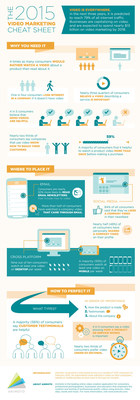
NEW YORK, May 7, 2015 /PRNewswire/ — Animoto, the leading online video creation application that empowers anyone to create and share extraordinary videos, today reported new survey results that detail the continuing evolution and growth of video marketing. The Animoto Online and Social Video Marketing Study surveyed 1,051 U.S. consumers and revealed that four times as many consumers would rather watch a video about a product than read about it. The company also published an infographic detailing these findings, available here.


According to eMarketer, video advertising is expected to hit $7.8 billion this year. Whereas only 14 percent of consumers remember the last display ad they’ve seen, 80 percent can recall the video ads they’ve watched online in the last week. (Source: Digital Content Next) The new Animoto data released today supports the growing trend of video marketing, revealing that consumers prefer to interact with businesses through video and that video marketing plays an essential role in acquiring new customers as well as engaging with current ones.


“The growth of online video marketing in recent years has been tremendous,” said Brad Jefferson, CEO of Animoto. “Today, there are more than 7 billion videos watched every day on Facebook and YouTube. Historically, in order to create and distribute high-quality video to your customers it was cost-prohibitive for all but the largest brands. However, today’s tools and platforms ensure that small and medium businesses can reach their audiences where they hang out online. This represents one of the biggest marketing opportunities for small businesses in a long time.”


Video Marketing Resonates With Consumers


Video is one of the most universally preferred ways of consuming content with nine out of ten consumers watching at least one online video per week. The data also shows that businesses with video marketing strategies have an elevated brand perception as a result:


  • 63 percent of consumers say companies that use video know how to reach their customers

  • One quarter of consumers lose interest in a company if it doesn’t use video

  • 56 percent of consumers believe that if a company has a website, it should have video

Video Boosts Email Marketing and Social Media Engagement


Marketers who leverage video in their email marketing and social media campaigns increase the chances of connecting with consumers:


  • 84 percent of all consumers said that they have liked a company video that has appeared in their newsfeed

  • 43 percent of consumers are more likely to read email newsletters that include links to video

  • 56 percent of consumers have watched a company video that came through email

  • Nearly half of all consumers have shared a company video on their own social media profile

Video Is Essential In The Purchasing Process


Consumers are demanding videos that tell the story behind the company and the products they’re buying. A majority of consumers also find it helpful to watch a product video more than once before making a purchase. When asked about video length, nearly two thirds believe company videos should be sixty seconds or less. Consumers also described the kinds of videos they’d like to see:


  • 80 percent of consumers say a video showing how a product or service works is important when learning about the company

  • 56 percent of consumers says customer testimonials are helpful when purchasing a product/service

  • About half of customers say that ‘about the company’ videos are the most helpful when purchasing a product/service

Animoto makes it easy for businesses to create effective, professional videos within minutes with no video editing experience. Businesses use Animoto to enhance and promote their brands, drive website traffic, increase sales, and create dynamic email, social and online marketing campaigns. For more information go to: http://animoto.com/business.


Animoto Online and Mobile Video Study


Animoto surveyed a representative sample of U.S. adult consumers to learn about consumer perception and experiences with video marketing as a promotional medium. The web-based survey was fielded February 9-11, 2015 with a sample size of 1,051 (Margin of error +/- 3.1 percent at a 95 percent confidence level).


About Animoto:


iPhone, iPad, or Android apps.


Animoto and Cinematic Technology are registered trademarks of Animoto Inc.


Photo – http://photos.prnewswire.com/prnh/20150507/214466-INFO 


SOURCE Animoto


RELATED LINKS
http://www.animoto.com


Animoto Survey: Consumers Want More Video Marketing on Web, Social and Email

Marketing E-Mails Your Clients Want to Click


How do you stay out of your customers’ spam inbox and get your customers to click on your e-mails? A recent study by Constant Contact looked at more than 2.1 million customer e-mails that were sent to more than 100 recipients over a 13 week time span to find out which e-mails had the highest click-through rate.


Overall, e-mails with three or fewer images and about 20 lines of text tended to have the highest open rates among e-mail subscribers.


Evaluating by industry, Constant Contact researchers found that real estate professionals saw the highest click-through rates when their messages were limited to around 35 lines of text. Also, the e-mails that were specific to new listings tended to get the highest click-through rates.


Ron Cates, director of digital marketing education for Constant Contact, emphasizes that to get higher click-through rates, e-mails should be concise, to-the-point, accurate (avoid misleading readers by using words or jargon that don’t offer a clear representation of your message), and courteous.


“While every brand and business has their own ‘voice’ in terms of communication, the general rule of thumb is to keep it nice and friendly,” writes Nicole Leinbach Reyhle, author of “Retail 101: The Guide to Managing and Marketing Your Retail Business,” in an article for Forbes.com. “Sure, you can offer a sassy twist if that’s your style, but keeping it courteous is always in style, as well.”


Watching your click-through rates on your e-mails is important in judging the success of your campaigns.


“Click-through rates are perhaps the truest measurement of the quality of an email’s content and its effectiveness as a marketing tool,” Christopher M. Litster, senior vice president, sales and marketing at Constant Contact, told Forbes.com. “Regardless of industry or customer base, click-through rates convey how often you are able to get your e-mail subscribers to go where you want them to go and complete your call-to-action. This new research is a big step forward in helping small businesses craft e-mail content that will result in even more successful campaigns going forward.”


Marketing E-Mails Your Clients Want to Click